
Short answer: yes, kind of. The famous 10,000 steps a day target did not come from a lab. It came from a 1960s Japanese pedometer ad. The good news is that recent research suggests real health benefits start well below 10,000, often around 7,000 to 8,000 steps for many adults, and that the number you hit on any single day matters far less than where your trend is heading.
Where did 10,000 steps even come from?
The 10,000 figure traces back to a 1960s Japanese pedometer called the manpo-kei, literally "ten thousand step meter." It was a round, memorable number picked to sell a device, not a threshold from a clinical trial. It stuck because it was catchy, and over the decades it quietly hardened into something that feels like medical fact.
So what does the research actually say?
There is no single magic number. The pattern across recent step-count studies is more forgiving than the 10,000 rule: the biggest gains come from leaving a sedentary baseline behind, much of the measurable benefit shows up around 7,000 to 8,000 steps for many adults, and the curve flattens after that. Older adults often benefit at even lower counts.
How walking's health benefit scales with daily steps
Illustrative, not exact data. The benefit climbs fast then flattens: going from 3k to 7k matters far more than 8k to 12k, and the amber 7k to 8k band is where much of the gain lands for many adults.
| 10,000 steps myth | What research leans toward |
|---|---|
| A scientific minimum everyone must hit | A round marketing number from a 1960s pedometer |
| Below 10,000 does not count | Big benefits often appear near 7,000 to 8,000 steps |
| One target fits all ages | Older adults can benefit at lower counts |
| More is always dramatically better | Gains are largest early, then flatten |
| A single day defines success | Your weekly and monthly trend matters most |
So what should you actually aim for?
Aim for a direction, not a number. A single day means little: you might hit 12,000 on a trip and 2,000 when you are sick. What tracks with better health is the trend, your weekly average drifting up and your low days getting less low. A rigid 10,000 goal can even backfire, because missing it daily feels like failing. A goal just above your real baseline works better:
- Find your real baseline from your average over the last week or two.
- Set a goal just above it. If you average 4,000, aim for 5,000, not 10,000.
- Track the weekly and monthly trend, and raise the bar only once the current goal feels easy.
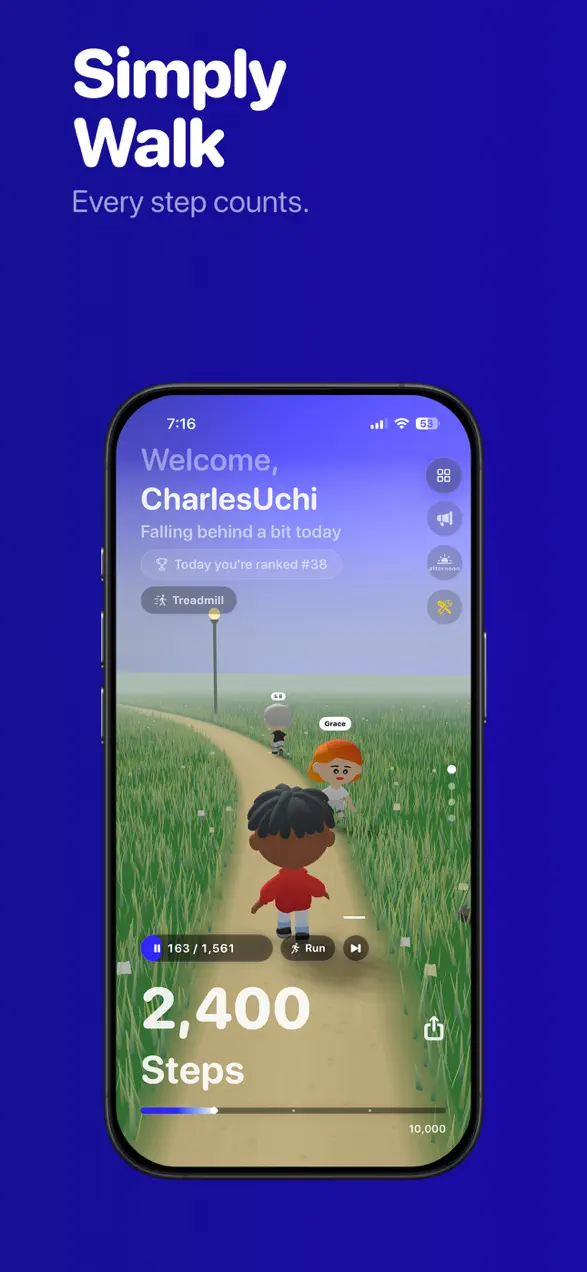
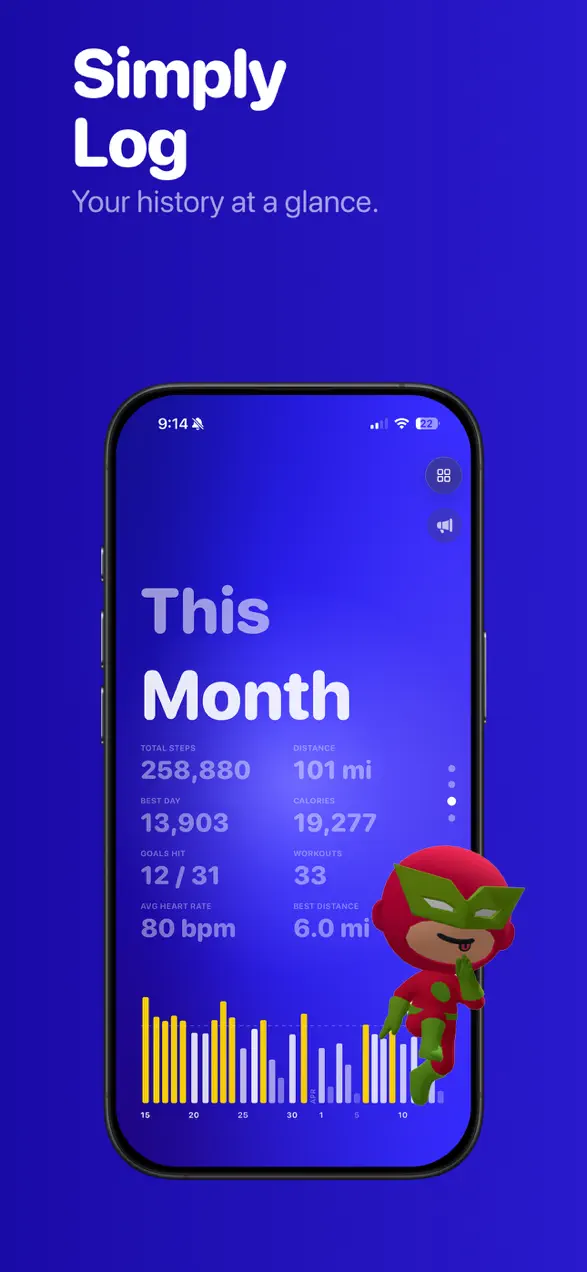
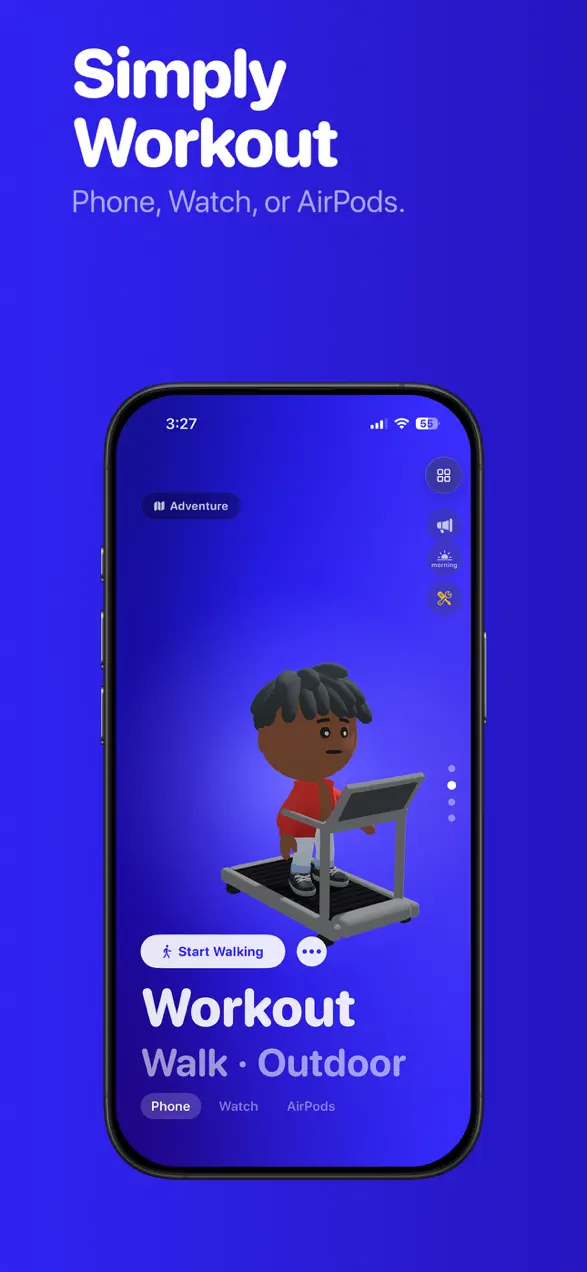
That is the whole idea behind Simply Step, the step counter I built to reward walking rather than nag you. It reads your steps from Apple Health and keeps your weekly and monthly trend front and center, so the line you are trying to move is always in view.
Why gamifying your steps actually works
Knowing you should walk more is the easy part. Doing it every day, especially on the days you do not feel like it, is where almost everyone falls off. That is a motivation problem, not an information problem, and it is exactly where the right features earn their keep. Three in particular move the needle, and Simply Step is built around all three:
- Rewards and instant progress. The health payoff from walking is invisible for months, so your brain needs a smaller, faster win to stay interested. In Simply Step, every 500 steps earns coins and your trend charts fill in as you move, so each walk pays off immediately instead of someday.
- Challenges with a finish line. A vague "walk more" is easy to ignore. A concrete target is not. Simply Step turns steps into daily goals, streaks you do not want to break, and city journeys that let you walk to 21 real cities using your actual steps, so there is always a next milestone to chase.
- Groups and friendly competition. Accountability is one of the strongest predictors of whether a habit sticks. Simply Step's friends leaderboards mean a few people notice whether you showed up today, and that small social nudge is often what gets you out the door.
None of this changes the science of how many steps you need. It changes whether you actually take them, day after day, which is the part that was ever going to decide your results.
The bottom line
- 10,000 is a 1960s marketing number, not a scientific minimum.
- Much of the health benefit shows up by 7,000 to 8,000 steps for many adults.
- Your weekly trend matters more than any single day's count.
- Set a goal just above your real baseline, then nudge it up. That is a far easier game to win.
Frequently asked questions
Where did the 10,000 steps goal come from?
It traces back to a Japanese pedometer marketed in the 1960s called the manpo-kei, which translates roughly to "ten thousand step meter." The number was a memorable, round marketing figure, not the result of a clinical study. It stuck because it was catchy and easy to remember.
How many steps a day do I actually need?
There is no single magic number, but recent research suggests meaningful health benefits begin well below 10,000 steps, often in the range of about 7,000 to 8,000 steps a day for many adults, with gains continuing as you add more. Older adults may see benefits at even lower counts. The bigger point is that almost any increase above a very sedentary baseline helps.
Is walking 10,000 steps a day still worth it?
Yes. More movement is generally better, and 10,000 steps is a fine target if it fits your life. The myth is not that 10,000 is bad, it is that 10,000 is a required minimum. If a big number discourages you from starting, a smaller, consistent goal is far more valuable.
What is the best way to track my steps?
Use whatever you will check every day. An app like Simply Step reads your step count from Apple Health, shows your live count and weekly, monthly, and yearly charts, and turns walking into a rewarding habit so you focus on your own upward trend rather than chasing one fixed number.