Everyone knows walking is good for them. Almost nobody walks as much as they mean to. The reason is not laziness, and the fix is not more discipline. To walk more every day, stop relying on willpower (it is a finite resource that runs out) and start engineering your day so that movement is the easy, rewarding default. Dopamine and accountability do the heavy lifting that motivation cannot.
Why does willpower fail when you try to walk more?
Willpower feels like the obvious answer, so it is worth saying plainly: it is the wrong tool. Self-control is a limited resource that gets drained by stress, tiredness, hunger, and the hundred small decisions you already make before lunch. By the time "should I go for a walk?" comes up, the tank is often empty.
Behavior researchers have spent decades showing that durable habits do not depend on feeling motivated. They depend on three things: a clear cue that triggers the action, low enough friction that starting is easy, and a reward your brain learns to anticipate. Get those right and the habit runs almost on its own. The tactics below are simply different ways to install that loop.
Tactic 1: Stack the walk onto something you already do
Habit stacking, a term popularized by James Clear in Atomic Habits, uses an existing routine as the trigger for a new one. The formula is "after I do [thing I always do], I will [new habit]." After I pour my morning coffee, I walk to the end of the block and back. After I finish a work call, I do a lap around the building.
The point is that you are not asking yourself to remember or decide. The first habit becomes the alarm clock for the second, which means you skip the part where willpower has to show up at all.
Tactic 2: Build a streak and refuse to break the chain
"Don't break the chain" is a productivity trick often attributed to comedian Jerry Seinfeld: mark an X on the calendar every day you do the thing, and your only job becomes not breaking the growing run of X's. It works because of loss aversion. Once you have a 12-day streak, missing a day feels like losing something, not just skipping a task.
The one rule that makes streaks survive real life: set the daily minimum low. A streak built on 12,000 steps collapses the first busy week. A streak built on "step outside and move for ten minutes" can run for months, and on good days you will walk far more than the minimum anyway.
| Tactic | What it fixes | Why it works |
|---|---|---|
| Habit stacking | Forgetting to start | An existing habit becomes the cue |
| Streaks | Quitting after one slip | Loss aversion plus daily reward |
| Reward loop | No payoff for showing up | Dopamine reinforces the behavior |
| Temptation bundling | Walking feels boring | Pairs a want with a should |
| Accountability | Easy to let yourself off | Something or someone is counting on you |
Tactic 3: Give every walk an immediate reward
Your brain learns from rewards that arrive quickly. The health payoff of walking is real but distant, so it does little to shape today's behavior. What shapes behavior is a small, immediate hit of satisfaction: a number going up, a level completed, a streak preserved, a cheerful sound when you hit your goal.
This is exactly why points, badges, and progress bars are so effective. They borrow the same dopamine reward loop that keeps games engaging and aim it at something genuinely good for you. The walk does not change. The feedback you get for it does.
Tactic 4: Bundle the walk with something you already crave
Temptation bundling, studied by behavioral economist Katherine Milkman, means only letting yourself enjoy a guilty pleasure while doing the habit you are avoiding. Save your favorite podcast, audiobook, or playlist exclusively for walks. Now you are not dragging yourself outside to exercise. You are going for a walk so you can finally hear the next episode.
It is a small reframe with a big effect, because it attaches a want to a should and lets the want pull you out the door.
Tactic 5: Walk a pet, real or virtual
Dog owners walk more, and not because they are more disciplined. They walk more because a living thing is sitting by the door, visibly depending on them. The accountability is external, gentle, and impossible to rationalize away. You can talk yourself out of a workout. It is much harder to talk yourself out of your dog's walk.
You do not need to adopt a real dog to borrow that effect. A virtual companion that clearly responds to your steps can create a surprisingly similar pull, which is the idea behind the app I cover later in this post.
Tactic 6: Lower the friction until starting is trivial
Most missed walks die in the first 60 seconds, before you have left the house. Remove the obstacles in advance: shoes by the door, a default route you do not have to think about, a podcast already queued. The goal is to make starting require almost zero decisions.
Pair this with a tiny on-ramp. Tell yourself you only have to walk for five minutes. Once you are moving and outside, you almost always keep going, because the hardest part was never the walk. It was the starting.
Tactic 7: Make your progress visible to someone else
Public commitment is a powerful lever. When a friend, a group, or a leaderboard can see whether you showed up, you get a second source of accountability that does not depend on your own mood. A standing walking date with a friend is one of the most reliable habits there is, because now skipping lets someone else down too.
If you do not have a walking buddy, a shared challenge or a friends leaderboard inside an app fills the same role surprisingly well.
How StepPup turns these tactics into a single habit loop
Most of the tactics above pull in the same direction: a clear cue, low friction, an immediate reward, and a sense that something is counting on you. StepPup was built to bundle all of that into one daily loop, which is why it ends up being a genuinely effective way to make walks stick rather than just another tracker.
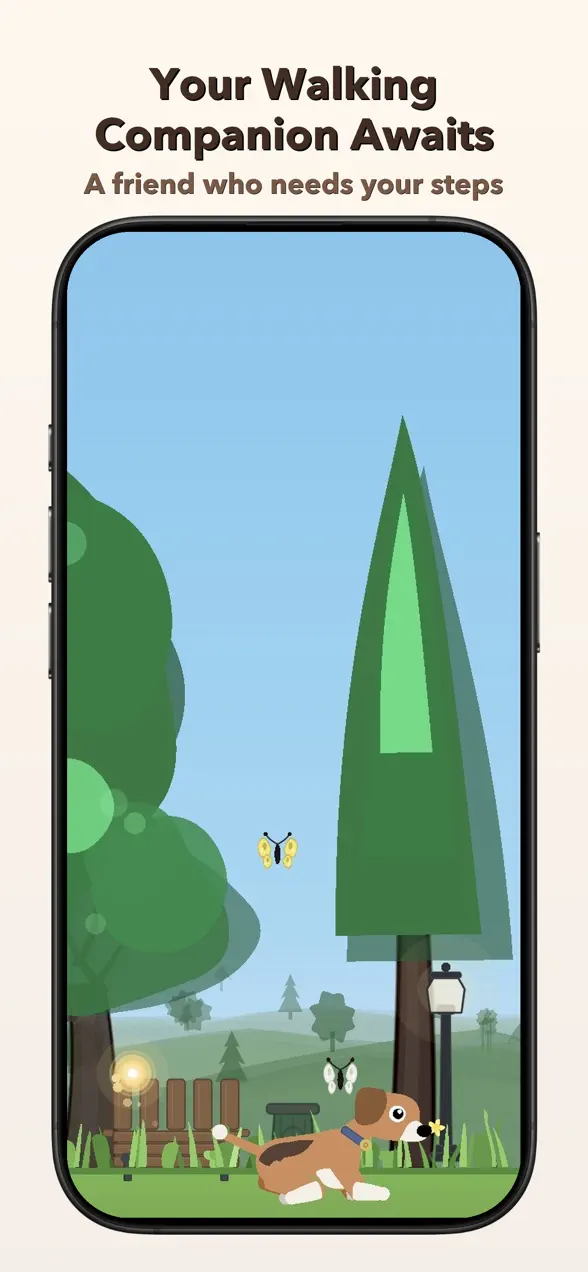
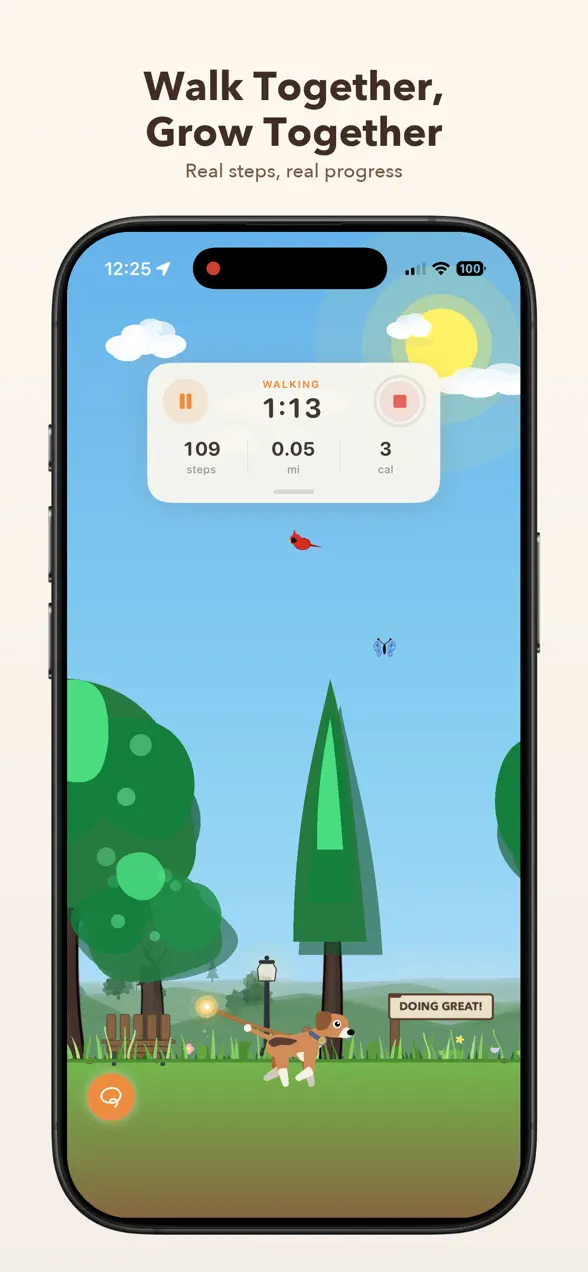
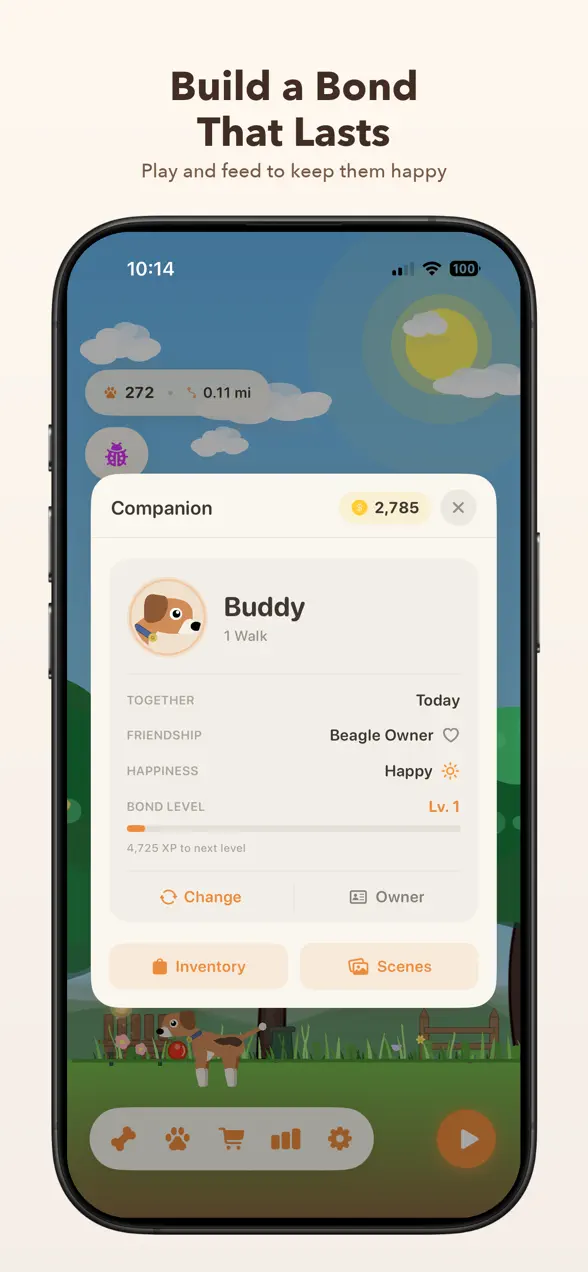
The core idea is simple. You adopt a virtual dog, and your real-world steps (read from HealthKit) directly drive your pup's happiness and wellbeing. Walk more, and your companion gets happier, levels up your friendship, and earns XP. That is the reward loop and the pet-walking accountability working together: there is a small creature whose day visibly improves because you moved, and a satisfying payoff every time you hit your goal.
It also covers the social side. You can add friends with friend codes and compare steps, streaks, and dog levels on a leaderboard, which is the "make it visible to someone else" tactic without needing to schedule anything. Daily challenges and streak rewards give you the "don't break the chain" mechanic, and 50 or more achievements across walking, streaks, and bonding milestones keep new short-term rewards arriving.
Why a virtual dog actually gets you walking
The tactics above explain how habits form, but they still leave the hardest part to you. StepPup matters because it wires each mechanism into one companion you genuinely do not want to let down. Here is how the behavior science maps onto what the app actually does.
- Something is counting on you. Your virtual dog's happiness depends on your real steps, so skipping a walk has an immediate, visible cost (your pup's mood drops), the same gentle accountability a real dog creates.
- An instant emotional payoff. Caring for and bonding with your dog rewards you right now, which matters because walking's health benefits stay invisible for months and cannot motivate today's walk on their own.
- A goal to keep chasing. Adopting and bonding with different breeds (Beagle, Golden Retriever, Husky, Shiba Inu, and more) gives you an ongoing milestone to work toward, while HealthKit and the Apple Watch app keep tracking effortless.
None of this changes the value of a walk. It changes whether you actually take one every single day.
The honest bottom line
You will not walk more because you finally found the willpower. You will walk more when the walk becomes the easy, obvious, rewarding thing to do. Stack it onto a habit you already have, keep the daily bar low, give yourself an immediate payoff, bundle in a podcast you love, and let something (a friend, a streak, a furry companion) hold you gently accountable. Pick two of these and start this week. The trick is to stop fighting yourself and start designing around yourself.
Frequently asked questions
Why does willpower fail when I try to walk more?
Willpower is a finite, easily drained resource that competes with stress, fatigue, and decision fatigue every day. Lasting habits do not run on motivation. They run on cues, low friction, and a reliable reward your brain learns to expect. The trick is to redesign your environment so walking is the easy default, not a daily battle.
What is habit stacking and how does it help me walk more?
Habit stacking means attaching a new habit to an existing one using the formula: after I do X, I will do Y. For example, after I pour my morning coffee, I will take a ten-minute walk. The established habit acts as a built-in reminder, so you do not rely on memory or motivation to get started.
How does a walking streak actually change behavior?
A visible streak turns an abstract goal into something concrete you do not want to lose. Loss aversion makes a growing chain of days surprisingly motivating, and the small hit of satisfaction from keeping it going reinforces the habit. The catch is to keep the daily target small enough that you can hit it even on a bad day.
Can a virtual dog really make me walk more?
Yes, for many people it works the same way a real pet does. A companion that visibly depends on your steps creates gentle accountability and a reward loop, so walking stops feeling like a chore and starts feeling like caring for something. StepPup builds this loop around a virtual dog whose happiness rises with your real-world steps.