You show up. You sweat. You are sore. And the mirror has not changed in months. Here is the uncomfortable truth: it is almost never the program. The real culprit is that your training is not actually getting harder over time, and you probably cannot prove it is, because you are not tracking your lifts. Fix that one thing and the gains usually come back.
Why am I not seeing gains even though I train hard?
The most common reason is the absence of progressive overload paired with no tracking. Muscle adapts to demands you place on it. If the weight, reps, and quality of your sets look the same this month as last month, your body has no signal to grow. Working hard is not the same as working harder than before, and without a log you cannot tell the difference.
Effort feels like progress, but feelings are unreliable. Two sweaty, exhausting sessions can leave you in exactly the same place if the numbers never move. The good news: the fixes below are simple, free, and mostly about paying attention.
What is progressive overload, and why does it matter most?
Progressive overload is the principle that you must gradually increase the demand on your muscles to keep forcing adaptation. That can mean more weight, more reps at the same weight, more quality sets, a fuller range of motion, or better control at a given load. The exact lever matters less than the direction: up, over weeks.
This is the single biggest reason people stall. They run a "good program" but run it flat, doing three sets of ten with the same dumbbells they used last spring. The program is not broken. The progression is missing. To overload, you first have to know what you did last time, which is exactly where tracking comes in.
The real reasons your gains stalled
Plateaus usually trace back to a short list of fixable mistakes. Here are the big ones, with what to do about each.
| The mistake | The fix |
|---|---|
| Not tracking your lifts | Log every set, rep, and weight so you can beat last time |
| No progressive overload | Add weight, reps, or a quality set when you hit your targets |
| Junk volume | Do fewer, harder sets that actually move your numbers |
| Inconsistent intensity | Track RPE so each working set lands near a challenging effort |
| Ego lifting | Lower the load, own full range and clean form, then build back up |
| No deload | Plan a lighter week when fatigue piles up so progress can resume |
1. You are not tracking your lifts
This is the root of almost everything else. If you do not record your sets, you are guessing every session. You cannot confirm you added weight, you cannot spot a lift that has been flat for a month, and you cannot tell a plateau from a bad day. Memory is a terrible spreadsheet. Write it down, and progress becomes a target instead of a hope.
2. You never apply progressive overload
Once you are tracking, the rule is simple: when you hit the top of your rep target with good form, make next time harder. Add a small jump in weight, squeeze out an extra rep, or add a quality set. A pound or two on the right lifts each week compounds into a very different body over a year.
3. You are drowning in junk volume
More sets is not automatically more growth. Junk volume is the extra work that piles on fatigue without adding a real growth signal, usually low-effort sets done well short of a hard finish. If adding sets does not move your logged numbers, those sets are costing you recovery for nothing. Trim them and push the sets that remain.
4. Your intensity is all over the place
One week you grind to near failure, the next you cruise. That inconsistency blunts the signal. Rate of Perceived Exertion (RPE) is a simple 1 to 10 scale for how hard a set felt, where leaving one or two reps in the tank lands around RPE 8 to 9. Logging RPE next to your sets keeps your working sets honestly challenging instead of accidentally easy.
5. You are ego lifting
Loading the bar past what you can control feels good and builds little. Half-range reps with sloppy form trade real tension on the muscle for a number you can brag about. Drop the weight, hit full range with a controlled tempo, and rebuild. Your logged numbers will be more honest, and so will your results.
6. You never deload
Fatigue accumulates. Push hard for many weeks straight and your performance can quietly decline even though you are trying harder. A planned deload, a lighter week with reduced load or volume, lets that fatigue clear so you can come back and set new records instead of spinning your wheels.
How do you actually fix it?
You do not need a new program. You need a feedback loop. Track every working set, look at what you did last time, beat it where you can, keep your hard sets genuinely hard, and back off when fatigue demands it. That loop is the entire game, and it is why a good log matters more than any clever routine. If you want a deeper walkthrough of the tool I built for exactly this, read the full Phyziq gym log review.
How Phyziq makes tracking and overload effortless
I built Phyziq because every plateau I have ever broken started with finally writing things down. The whole app is designed to remove the friction that stops people from tracking in the first place.
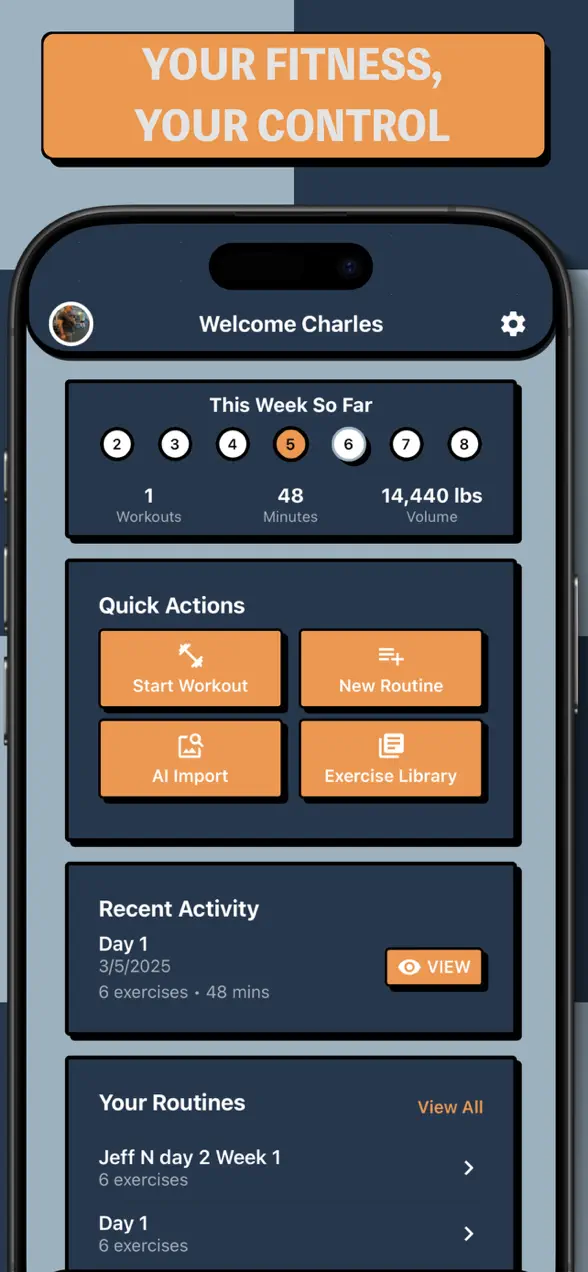
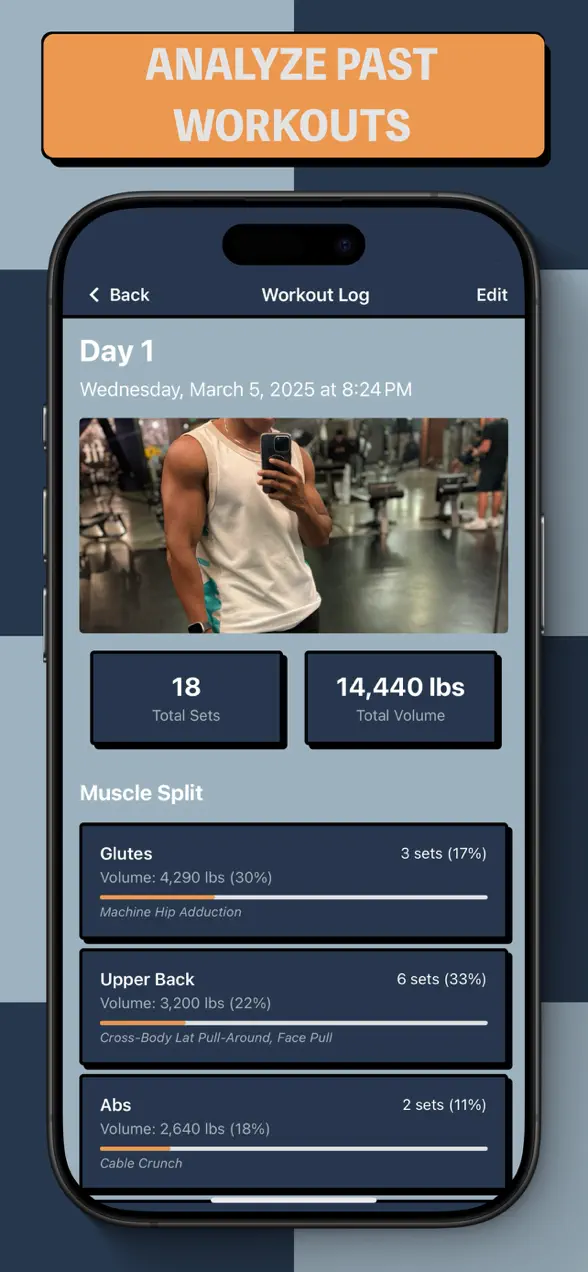
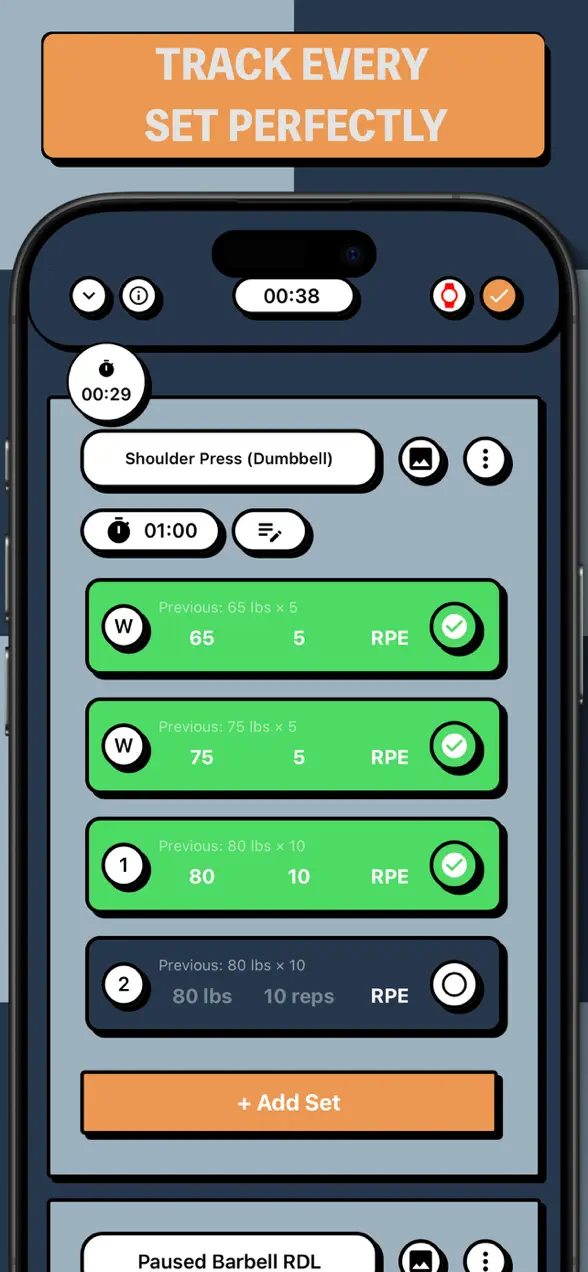
You log sets, reps, and weight in real time, with a built-in rest timer and support for weight-based, bodyweight, and timed exercises. Every working set can carry an RPE value and a set type (warm-up, normal, drop-set, or failure), so your intensity stops being a guess. Your complete history is one tap away, which means "beat last time" is always right in front of you, and the app detects personal records for weight, reps, and volume automatically so progressive overload is visible, not theoretical.
The part that saves the most time is the AI. Snap a photo of any workout plan and Phyziq's AI Routine Import extracts the exercises for you. Or let AI Program Generation build a personalized multi-week program around your goals, experience, and equipment. With 340 plus exercises, muscle-group heatmaps, progress photos, and Apple Health integration, the tracking does the heavy lifting so you can focus on the actual lifting.
How Phyziq makes progressive overload automatic
The fixes above all depend on one thing: knowing your numbers and acting on them every session. Phyziq lines up with each fix directly, so the feedback loop runs itself.
- See your last numbers so you can beat them. Real-time set, rep, and weight logging plus your full workout history mean you always walk in knowing exactly what to add this week.
- Manage intensity instead of guessing. RPE tracking and set types (warm-up, drop-set, failure) keep every working set honestly hard, so your volume is real work and not junk.
- Remove the friction that makes people quit logging. AI Routine Import lets you snap a photo of any plan to auto-import the exercises, AI program generation builds one for you, and a built-in rest timer keeps sessions tight.
The program is rarely the problem. Consistency and tracking are, and that is exactly what Phyziq handles.
The one habit that changes everything
If you take nothing else from this: start logging. Not because it is fancy, but because you cannot improve a number you never wrote down. The lifters who keep growing year after year are rarely the ones with the most exotic programs. They are the ones who know exactly what they lifted last time, and beat it. Pick that habit up this week and the mirror will start cooperating.
Frequently asked questions
Why am I not seeing gains even though I train hard?
In most cases the issue is not your program or your effort. It is that your training is not progressing over time. If the weight, reps, or quality sets you do this month look the same as last month, your muscles have no reason to adapt. Tracking your lifts and adding a little each week (progressive overload) is what restarts growth.
How do I know if I am actually using progressive overload?
Progressive overload means you can point to a number that is going up over weeks: more weight on the bar, more reps at the same weight, more quality sets, or better control at a given load. If you cannot look back at what you lifted last time, you cannot confirm you are overloading. A workout log makes this obvious at a glance.
What is junk volume and how do I avoid it?
Junk volume is extra sets that add fatigue without adding a meaningful growth signal, often low-effort sets done well short of a challenging level. You avoid it by doing fewer, harder sets that you actually record, then checking whether your logged performance is improving. If adding sets does not move your numbers, those sets are likely junk.
Do I really need a deload week?
If your lifts have stalled or gone backward for two to three weeks, your joints ache, and motivation is low, a planned lighter week (a deload) often lets accumulated fatigue clear so real progress can resume. You do not need one constantly, but ignoring fatigue is a common reason long-term progress stalls.